You've tried everything.
The timer app that your kid figured out how to bypass. The "no screens before dinner" rule that turned every evening into a negotiation. The weekend ban that led to two days of sulking and then a three-hour binge the moment you caved. You've taken the iPad away. You've threatened, bargained, and felt guilty about all of it.
Here's the uncomfortable truth no parenting blog wants to say out loud: you are not going to win this war.
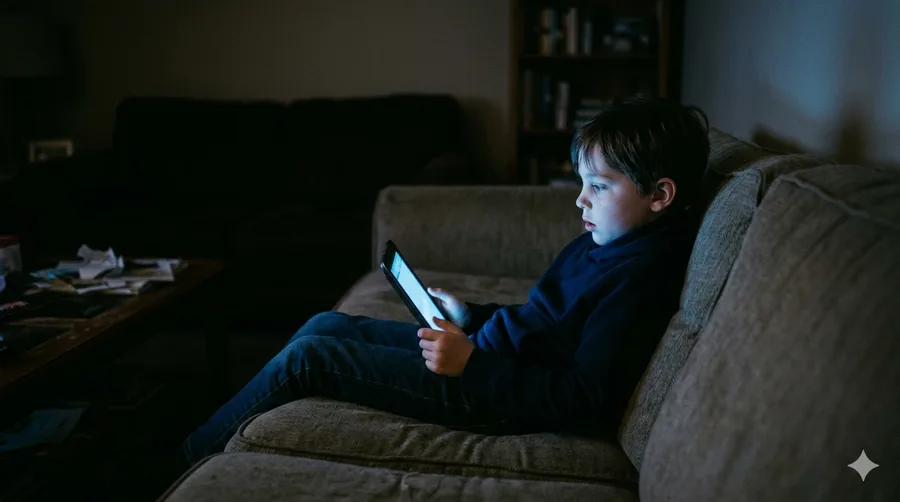
Not because you're a bad parent. Not because your kid is broken. But because you're fighting against something far bigger than willpower — yours or theirs. Screens are engineered by billion-dollar companies to be irresistible. The dopamine loops, the autoplay, the infinite scroll — none of that happened by accident. It was designed, tested, and optimized to keep attention locked in. You're trying to out-parent a team of behavioral engineers.
And the harder you fight, the worse it often gets. Psychologists call it the forbidden fruit effect. When something is banned, it becomes more desirable. When kids feel policed, they get sneaky. When screens become the enemy, they become the prize — the thing your child thinks about and craves precisely because you've forbidden it.
So what do you do? Keep losing the same battle, week after week?
→ The solution more parents are turning to is surprisingly simple — see it here.
The Real Problem Isn't Screens. It's What's On Them.
Here's the reframe that changed everything for a lot of parents: the screen itself is neutral. A book is a screen. A video call with grandma is a screen. Khan Academy is a screen. The problem was never the device in your child's hands — it was the algorithm on the other side of it, feeding them one more video, one more clip, one more scroll.
Passive consumption is the enemy. Not screens.
There's a meaningful difference between a kid who stares blankly at a 45-minute YouTube compilation of other kids unboxing toys, and a kid who is actively solving a puzzle, answering a trivia challenge, earning a streak, unlocking a rare reward. Both kids are on a screen. But one is having their attention harvested. The other is actually using their brain.
The battle most parents are fighting — take the screen away, set a timer, enforce the limit — addresses the wrong variable. It treats the screen as the disease. But the screen is just the delivery mechanism. The content is what matters.
Which means the smarter move isn't to take the screen away.
It's to change what's on it.
What a Friend Said That Stopped Me in My Tracks
A few months ago, someone in my parenting group said something that I haven't been able to stop thinking about.
"I stopped fighting the iPad," she said. "I just changed what was on it."
She wasn't describing some extreme digital detox or a complicated parenting method. She'd found a tool — a friend had recommended it — that replaced the apps her son was glued to with something that gave him the same buzz: points, rewards, streaks, challenges. Except instead of watching videos or playing endless games, he was answering questions about science, history, and whatever topics he was into that week.
"He doesn't even notice it's educational," she laughed. "He just thinks he's winning."
That tool was BrainOshi.
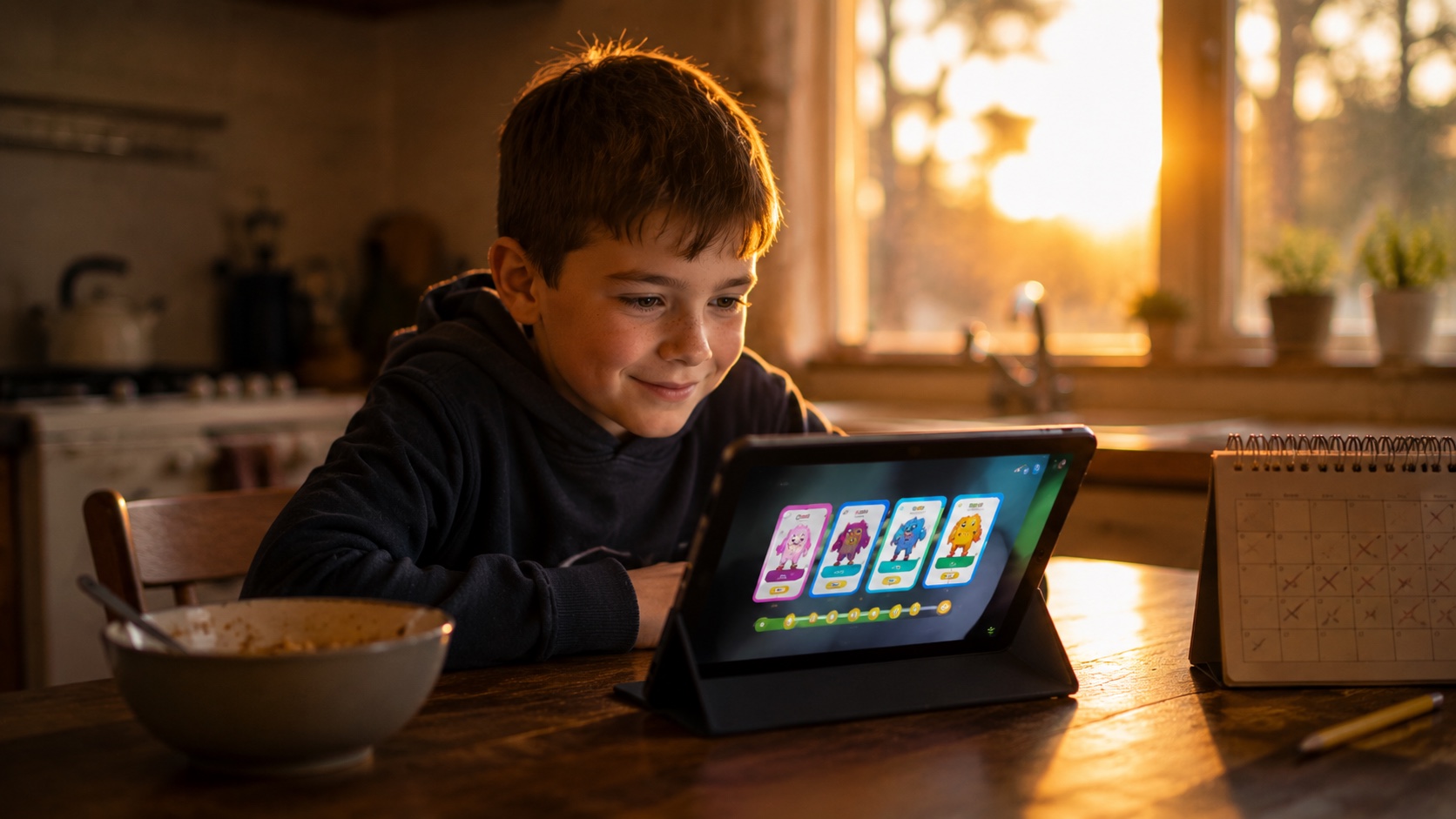
BrainOshi is a daily learning app built specifically for kids — and specifically designed to avoid every trap that makes other screen time problematic. Each day, a child gets a finite deck of 10 to 15 interactive learning cards. Multiple choice questions, true-or-false challenges, matching games, fill-in-the-blank, ordering tasks. Cards tailored to their age, interests, and difficulty level.
When the deck is done, it's done. The app closes itself. There is no next video. No autoplay. No rabbit hole. It ends — by design — in about 10 minutes.
And in those 10 minutes? Kids earn points, build streaks, unlock badges, and even face off against bosses in special challenge rounds. There are rare cards — Common, Rare, Epic, Legendary — that kids genuinely get excited to unlock. The gamification is real. The dopamine loop is real. But it's attached to learning, not to endless consumption.
What is BrainOshi?
BrainOshi is a daily learning app for kids that replaces mindless scrolling with a short, gamified session of interactive challenges — limited to 10 minutes a day, with no ads, no chat, and no infinite scroll. Parents control the topics, difficulty, and schedule.
→ Try it free at brainoshi.com
Why This Actually Works (Psychologically)
Kids aren't addicted to screens. They're addicted to the feeling screens give them — the hit of novelty, the sense of progress, the anticipation of reward. That's the dopamine loop.
BrainOshi doesn't try to eliminate that loop. It hijacks it.
Your child still gets the streak to protect. Still gets the rare card to chase. Still gets the feeling of leveling up and being rewarded for effort. But instead of that loop being wrapped around passive consumption, it's wrapped around answering a science question correctly or solving a word puzzle.
The neuroscience here isn't complicated. Brains — especially developing ones — are wired to seek reward. Apps like TikTok figured this out and used it to capture attention for profit. BrainOshi uses the same mechanism to build knowledge instead.
And there's a second effect that parents notice almost immediately: you stop being the villain.
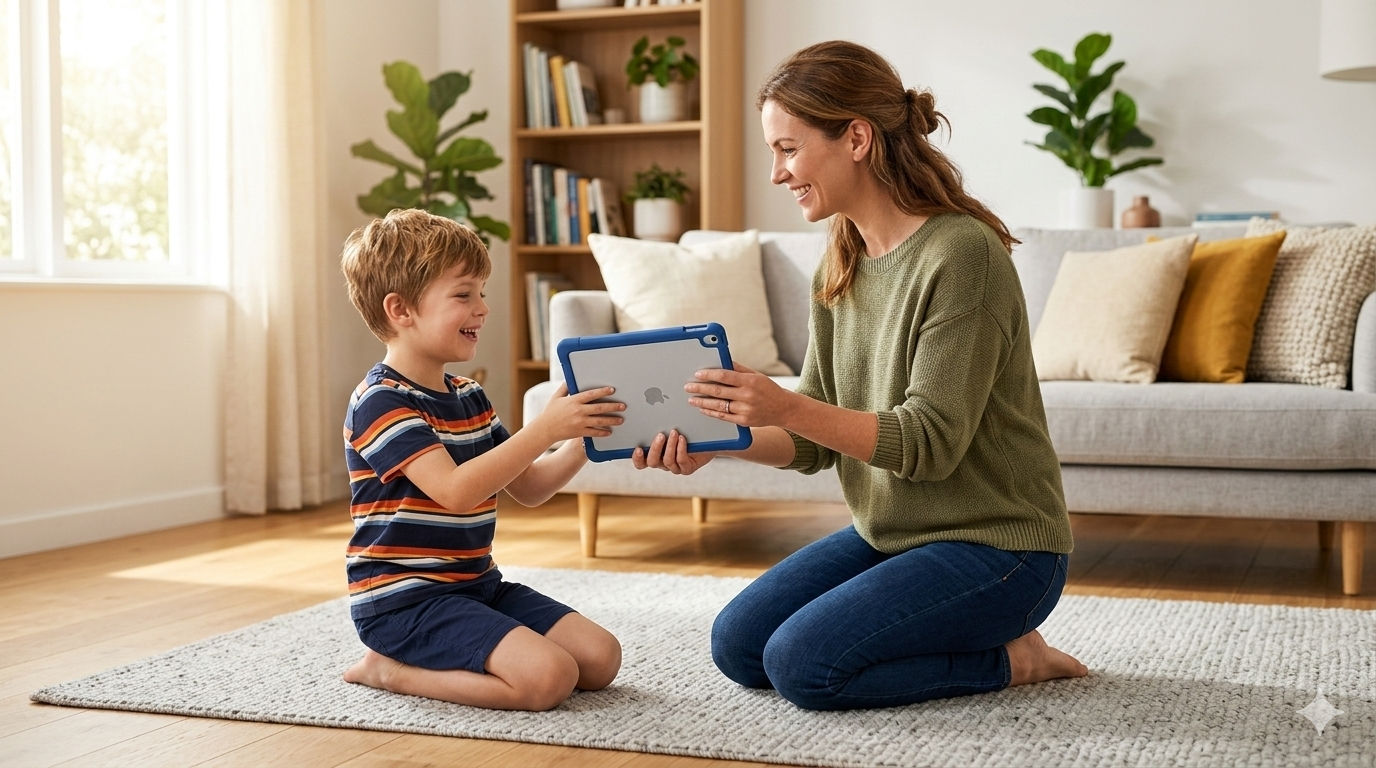
When screen time means TikTok and Roblox, you are the parent who takes away the fun. When screen time means BrainOshi, you're the parent who gave them something cool. You're not fighting. You're not bargaining. You're not setting timers and watching them count down the seconds until they can go back. The dynamic shifts completely.
What 30 Days Actually Looks Like
Parents who make the switch describe a similar arc. The first week, there's mild skepticism. Kids try it because it's new. The second week, the streaks kick in — and nobody wants to break a streak. By the third and fourth week, something clicks: the kid is opening the app on their own.
Not because a parent told them to. Not because there's a rule. But because they want to beat yesterday's score, unlock the next rare card, or maintain a streak they've been building for three weeks.
No more daily battles. No more guilt. No more negotiating over minutes.
One parent put it simply: "My daughter used to hide her phone. Now she shows me her score at dinner."
Another said: "I thought I'd have to force him to use it. He reminds me if I forget to unlock his daily session."
BrainOshi has more than 350 families using it now — and growing. The plans start free, with Premium available at €4.99 per month and a Max tier at €9.99 per month. Parents control everything: which topics their child sees, how difficult the questions are, how long each session runs, and what time of day it unlocks.
No ads. No chat. No way to fall down a rabbit hole. Just a short, satisfying daily session that ends itself.
You Didn't Fail. You Just Had the Wrong Strategy.
Here's the mindset shift that ties all of this together.
You're not failing as a parent because your kid loves screens. Screens are compelling. They're designed to be. Blaming yourself — or your child — for that is like blaming yourself for finding fast food convenient. The system is designed to pull you in.
The solution was never to deprive. Deprivation doesn't work with food and it doesn't work with screens. The solution is to make the better option just as appealing as the bad one.
And that's exactly what BrainOshi does. It meets kids exactly where they are — on a screen, chasing rewards, wanting to win — and it makes that instinct work for them instead of against them.
You don't have to fight for the screen anymore. You just have to put the right thing on it.
Ready to stop the daily battle? Give BrainOshi 10 minutes.
→ Start free at brainoshi.com — no credit card required.
The deck ends itself. The fighting doesn't have to.